Understand the context
Review services and products, customers, competitors, markets, sales process, existing web performance, technology, marketing channels, and growth objectives.
Roaring Media Agency / Web Development Program
Strategic websites, ecommerce, and custom web experiences designed around real customer journeys.
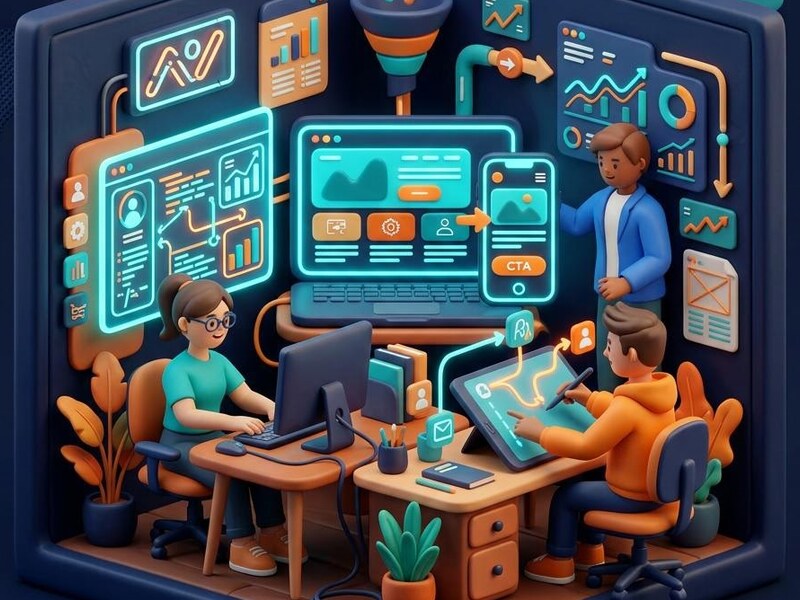
Roaring Media plans and develops websites around your business, customers, and the actions that matter—from quote requests and appointments to purchases and applications. Strategy, design, development, SEO foundations, integrations, measurement, and optimization come together to make your website an active part of how the business grows.
Beyond the brochure / 01
01 / A different starting point
A digital hub built to be found, understood, trusted, measured, and converted—with the right structure and connections for your business.
We begin with the business: objectives, products and services, audiences, competitors, markets, sales process, existing website, technology, marketing channels, and growth priorities. That discovery identifies customer needs, operational requirements, and the actions the experience should support.
We turn those findings into a customer journey, site architecture, page requirements, content hierarchy, conversion paths, and a measurement plan. Design and platform decisions follow the functionality, integrations, content needs, team capabilities, and long-term direction—not a fixed template or platform.
02 / Inside the program
The right mix of strategy, experience, technology, and measurement is shaped around the way your business operates.
01 / Program discipline
A useful website begins with a clear picture of the business—not a template choice. Discovery connects business priorities with what customers need to understand and do.
Review services and products, customers, competitors, markets, sales process, existing web performance, technology, marketing channels, and growth objectives.
Plan for the actions that matter to the business, such as requesting a quote, booking an appointment, purchasing, applying, calling, visiting, or starting a conversation.
Define the journey, sitemap, navigation, page requirements, functionality, integrations, and measures that will shape the experience.
02 / Program discipline
Responsive experiences are designed around customer questions and the next logical step. Every page should have a purpose, with usability and credibility supporting the journey.
UX and interface design can cover navigation, page layouts, mobile behavior, service and product pages, industry or location pages, and interactive elements.
Calls to action, forms, multi-step questionnaires, appointment flows, landing pages, and campaign pages can be organized around relevant business goals.
Content structure can make room for useful proof, testimonials, offers, pricing information, and other trust elements where they help customers make decisions.
Customer portals, authenticated areas, and other custom interactions are available when a project’s requirements call for them.
03 / Program discipline
The site structure should help people understand the offer and give search engines a coherent, crawlable experience. SEO considerations belong in the architecture and development work, not only in a later checklist.
Plan the hierarchy for homepage, product and service information, company pages, FAQs, industry and location pages, resources, blog architecture, and calls to action as appropriate.
Project scope can address URL structure, page hierarchy, internal links, metadata, headings, image optimization, redirects, XML sitemaps, canonicalization, and structured-content or schema opportunities.
For clients working with Roaring Media’s SEO Program, the website can provide a technical base for a larger organic content and growth strategy.
04 / Program discipline
For businesses selling online, ecommerce scope can be tailored to the products, services, subscriptions, memberships, or digital offerings being sold.
Depending on requirements, capabilities may include product catalogs, categories, variants, inventory, customer accounts, checkout, and order notifications.
Payment integrations, shipping and tax configuration, coupons, promotions, subscriptions, and abandoned-cart workflows can be considered for the selected commerce model.
Analytics, CRM synchronization, and marketing automation can connect online activity with other customer and business processes where appropriate.
05 / Program discipline
A website can be connected to the tools and processes around it so that customer activity has a useful next step instead of stopping in an inbox.
Depending on project needs, connections may include CRM, email and SMS, scheduling, payments, ecommerce, analytics, advertising, support, live chat, forms, accounting, reviews, social platforms, webhooks, or APIs.
Website activity can trigger CRM records, notifications, lead assignment, follow-up campaigns, appointment workflows, sales tasks, and related processes when those connections are in scope.
Optional experiences include chat assistants, lead qualification, intelligent forms, FAQ responses, conversational scheduling, knowledge search, recommendations, or customer support, with possible connections to the Roaring Media AI Automation Program.
06 / Program discipline
Measurement is planned around the customer journey so decisions can draw on observed behavior rather than assumptions. The exact tracking setup depends on the available systems and agreed project scope.
Strategies may include website analytics, advertising pixels, calls, forms, appointments, ecommerce events, campaign attribution, and conversion events.
CRM attribution can help relate sources and website activity to leads and later stages when the underlying systems and data support it.
After launch, performance data can inform changes to pages, offers, content, conversion paths, SEO, automation, and customer experience.
07 / Program discipline
The technology is selected to suit functionality, scalability, integrations, content-management needs, internal capabilities, and long-term business objectives. No single platform is assumed for every project.
Possible approaches include WordPress, WooCommerce, Shopify, Webflow, headless architectures, custom front-end work, APIs, databases, portals, and custom web applications.
Quality checks can cover browsers, devices, screen sizes, forms, links, integrations, tracking events, and critical customer journeys.
Development considerations include speed, mobile performance, SSL, security, backups, spam protection, image optimization, caching, Core Web Vitals, accessibility, compatibility, uptime, and error monitoring.
08 / Program discipline
The work moves from understanding and planning through build, launch, and learning. After launch, available performance data can guide the next improvements rather than treating the site as a finished, isolated brochure.
Identify objectives, audiences, offerings, competitors, technology, marketing channels, conversion goals, integrations, and operational requirements.
Establish the customer journey, sitemap, navigation, page requirements, conversion architecture, functionality, integrations, and measurement approach.
Plan page layouts, content hierarchy, calls to action, forms, trust elements, mobile behavior, and customer interaction points.
Develop a visual experience around the client’s brand, with attention to usability, clarity, credibility, and conversion.
Build the responsive website and connect the agreed CMS, databases, forms, APIs, CRM, marketing, payment, and other systems.
Implement agreed technical SEO elements, analytics, conversion events, pixels, attribution needs, and search-discovery foundations.
Test devices, browsers, forms, integrations, links, tracking events, and key customer journeys.
Configure the production environment, verify domains and redirects, complete final checks, and publish the site.
Use available performance data to inform improvements to pages, offers, content, conversion paths, SEO, automation, and customer experience.
09 / Program discipline
The website can serve as a central digital hub for marketing, sales, customer communication, automation, and analytics—not an isolated online brochure.
As relevant to the business, a site can work alongside Roaring Media SEO, Mobile CMO, AI Automation, paid advertising, content, social media, CRM, email, SMS, reputation management, and marketing automation programs.
Post-launch optimization can respond to performance evidence and changing business needs, with the next work focused on the pages, content, paths, and connections that matter most.
03 / The connected path
The work can bring together responsive UX and visual design, CMS or application development, content and SEO foundations, ecommerce, forms, integrations, and tracking. Scope is shaped to the project; optional capabilities such as AI assistants, portals, subscriptions, and advanced automation are included when they fit the business need.
Before launch, we test key devices, browsers, forms, links, integrations, tracking events, and customer journeys. After launch, available behavior and performance data can guide improvements to pages, content, conversion paths, SEO, automation, and customer experience.
04 / The working platform
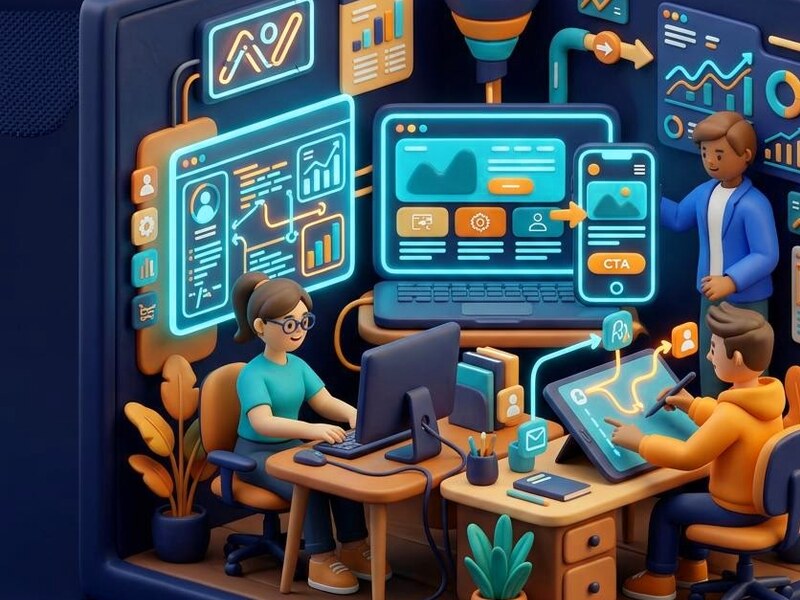
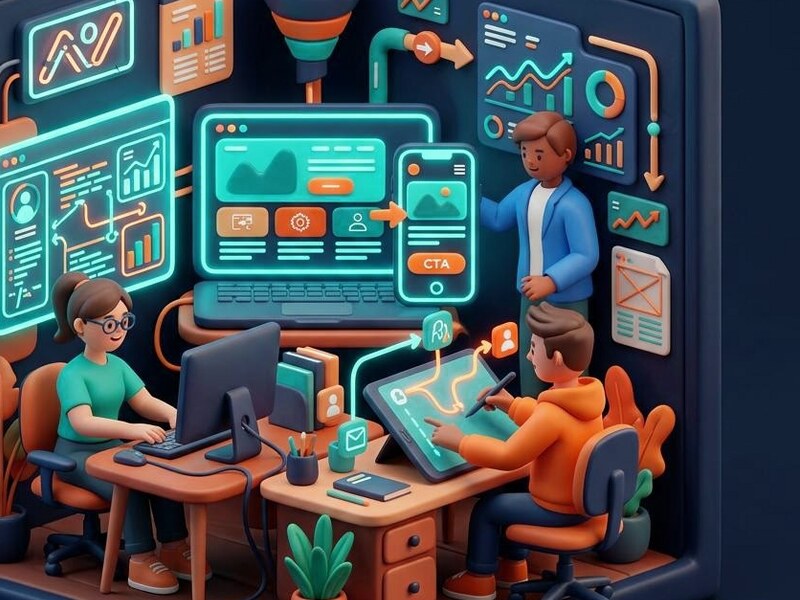
From the first visit to the next conversation, every part of the experience should have a purpose—and room to evolve.
05 / What fits
Businesses planning a new website or redesign, launching ecommerce, replacing disconnected digital journeys, or needing a custom web experience that fits their services, sales process, customers, and operating systems.
Program capabilities
06 / Beyond launch
07 / Questions
Projects can include new websites, redesigns, ecommerce stores, landing-page systems, customer portals, and custom web applications. Discovery helps determine the appropriate scope based on the business, customer journey, functionality, and systems involved.
There is no fixed platform for every project. Options may include WordPress, WooCommerce, Shopify, Webflow, headless approaches, or custom development. Selection depends on functionality, scalability, integrations, content management, internal capabilities, and long-term objectives.
Integrations can be scoped for systems such as CRM, email and SMS, scheduling, payments, analytics, advertising, support, and ecommerce. The right connections depend on your current tools and the workflows the website needs to support.
SEO foundations can be built into the site architecture and development, including items such as page hierarchy, URLs, internal links, metadata, redirects, sitemap, canonicalization, and performance considerations. Ongoing SEO strategy and content growth can be coordinated separately through Roaring Media’s SEO Program.
After launch, available performance and customer-behavior data can inform improvements to pages, offers, content, conversion paths, SEO, automation, and the overall experience. Ongoing optimization can be scoped around your priorities.
The next useful move
Tell us about the journey, the friction, and where you want to grow. We’ll start with the business problem, then talk about the right build.