

Skip to content

Roaring Media / Content & creative

Make it
mean
something.

Roaring Media’s Content & Creative Program turns brand strategy, customer insight, and campaign goals into coordinated written, visual, and video content. We plan creative around the audience, message, channel, and customer journey so each asset has a clear purpose and can work as part of a broader marketing effort.

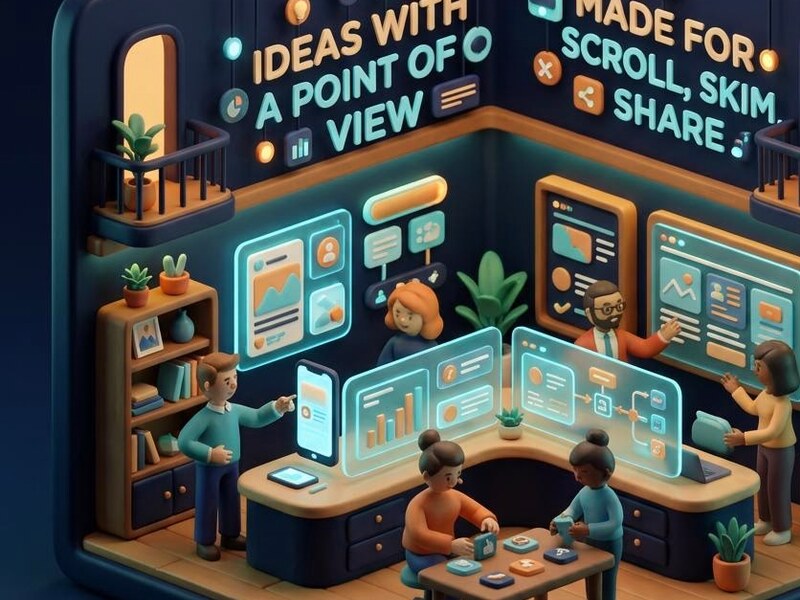
Creative composition representing editorial, visual and campaign work
Ideas / shaped for the world01 — 03
From the first idea to the next iterationScroll to explore

01 / The thinking

Great content isn’t a stack of assets.
It’s a connected operation.

We review business priorities, audiences, positioning, customer questions, sales process, existing assets, channels, and available performance evidence. The review helps identify content gaps, useful proof, campaign opportunities, and the formats most relevant to the customer journey.

  • Content strategy, audience planning, and editorial calendars
  • Brand messaging, voice, and creative direction
  • Copywriting, search-oriented content, and editorial resources
  • Social media creative and short- or long-form video concepts
  • Graphic design, campaign creative, and paid-media variations
  • Website, landing-page, sales, and customer-story content
  • Content repurposing and AI-assisted production with human review
  • Production workflow, approvals, asset organization, and measurement planning (as scoped)

02 / Inside the program

One story.
Many ways in.

We connect content pillars and editorial priorities to brand voice, audience needs, channel context, and the action each asset should support. The plan can include written, search-oriented, social, video, campaign, website, and sales content, with scope shaped to the engagement.

01 / 09

Set a content strategy around the customer journey

Start with business priorities and audience needs, then decide what the content should communicate, where it belongs, and what useful next step it supports.

Understand the context

Review audiences, customer motivations and objections, offerings, sales process, competitors, existing content, and relevant channels.

Define pillars and priorities

Organize themes around education, authority, problems and solutions, products and services, trust, conversion, and brand stories.

Plan the journey

Connect topics and formats to customer questions, funnel stages, campaigns, calls to action, and an editorial or promotional calendar as appropriate.

02 / 09

Give every channel a recognizable voice and direction

A shared creative framework helps communications feel coherent while allowing each format to suit its audience and context.

Clarify brand messaging

Shape the value proposition, differentiators, benefits, proof points, customer promises, and calls to action around approved positioning.

Set the voice

Document tone, personality, terminology, messaging style, and practical language guidance for writers and collaborators.

Guide visual expression

Define relevant direction for typography, imagery, photography, graphics, layouts, video treatments, and recurring templates.

03 / 09

Write useful content for people and search discovery

Written work can make expertise easier to understand, find, and use, balancing readability and persuasion with the purpose of each page or asset.

Create core copy

Depending on scope, develop website, service, product, landing-page, email, newsletter, social, advertising, and sales copy.

Build editorial resources

Develop articles, guides, FAQs, explainers, case studies, customer stories, white papers, eBooks, and executive thought leadership.

Answer real questions

Use customer questions and subject-matter expertise to shape topic clusters, comparisons, definitions, expert answers, and educational resources that support search visibility without promising rankings.

04 / 09

Make social and video native to their formats

Social content is adapted for the platform and audience rather than mechanically resized. Video can be planned as source material for a wider content mix.

Develop social creative

Create concepts for static posts, carousels, stories, polls, product highlights, educational sequences, testimonials, and community prompts.

Plan short-form video

Develop hooks, concepts, scripts, storyboards, shot lists, talking points, captions, on-screen text, and calls to action as scoped.

Shape longer-form stories

Brand films, interviews, explainers, demonstrations, webinars, podcasts, testimonials, and event content may be planned or produced when included in the engagement.

05 / 09

Connect design, campaigns, and paid creative

Campaigns benefit from a consistent idea and visual direction across the first impression, landing experience, and follow-up materials.

Design for the task

Graphic work may include social assets, ads, email graphics, banners, infographics, presentations, brochures, event materials, lead magnets, and reusable templates.

Build campaign systems

Develop the big idea, message, offer, visual direction, creative variations, landing-page content, and follow-up materials as agreed.

Prepare variations for learning

Paid-media creative can explore different hooks, headlines, offers, imagery, video, proof, formats, and calls to action; media buying and delivery are separate unless scoped.

06 / 09

Carry the story through websites, sales, and customer proof

Creative should continue the customer experience after a click and give sales teams clear, relevant material for real conversations.

Support web journeys

Content for home, service, product, industry, location, campaign, comparison, case-study, and lead-generation pages can address intent, value, proof, objections, and next steps.

Equip sales conversations

Sales decks, one-sheets, product or service sheets, FAQs, proposal templates, objection responses, follow-up emails, and demo materials may be developed as needed.

Turn customer experience into proof

With appropriate customer input and permissions, stories can document challenge, approach, implementation, experience, results, and perspective for useful marketing and sales formats.

07 / 09

Repurpose strong ideas with human review

A useful original asset can inform multiple formats, while AI may assist selected production tasks when it fits the brief and engagement.

Plan content multiplication

A webinar, interview, or report may be adapted into articles, short videos, social posts, carousels, email content, FAQs, quotes, and sales materials.

Use AI selectively

AI-assisted ideation, research, draft or headline variations, transcription, summaries, metadata, localization, and performance analysis may be considered when appropriate.

Keep people accountable

AI does not replace strategy, brand judgment, source checking, permissions, editorial review, or human responsibility for the final content.

08 / 09

Make the workflow and approved assets easier to manage

A visible process helps teams understand what is being made, why it matters, who reviews it, and which version is ready to use.

Brief and review consistently

Requests can capture objective, audience, channel, message, offer, dimensions, deadline, supporting files, brand requirements, and required approvals.

Move work through clear stages

A workflow may include idea, brief, production, internal review, client review, revisions, approval, and delivery or publishing, with version history where agreed.

Organize approved materials

An asset library can be arranged by brand, campaign, offering, industry, channel, content type, or date; setup and ongoing library management depend on scope.

09 / 09

Use available evidence to improve the next creative

Measurement should reflect the purpose of the content and the data available across the agreed channels and systems.

Review relevant signals

Depending on scope and data access, measures can include reach, impressions, engagement, views, watch time, completion, saves, shares, click-throughs, site activity, leads, or conversions.

Connect content with business context

When tracking supports it, review sales usage, assisted conversions, revenue contribution, cost measures, and campaign or creative performance without overstating attribution.

Apply the learning

Use available evidence and audience response to inform future topics, formats, creative variations, refreshes, distribution, and priorities; no specific outcome is promised.

Visual study of content made across multiple formats

Made to move

The idea doesn’t stop at the first format.

Strategy, briefs, copywriting, design, editing, and adaptation can be coordinated through agreed review and approval steps. Production, publishing, video shoots, AI-assisted work, asset-library setup, and channel execution are optional capabilities whose availability depends on the engagement; human review remains important for accuracy and brand judgment.

03 / The production cycle

The seven-step content process

A repeatable cycle moves from understanding the opportunity to applying what the available evidence teaches. The exact deliverables and channel execution depend on the engagement.

  1. 01

    Discover

    Explore the audience, market, competition, customer questions, existing content, and opportunities.

  2. 02

    Strategize

    Set messaging, content pillars, campaign priorities, formats, channels, and intended actions.

  3. 03

    Create

    Develop original written, visual, video, and campaign assets within the agreed scope.

  4. 04

    Multiply

    Adapt high-value source content into additional formats suited to different moments and channels.

  5. 05

    Distribute

    Plan or carry out distribution across agreed owned, social, search, email, sales, earned, or paid channels as scoped.

  6. 06

    Measure

    Review audience response and business measures where reporting and data are available.

  7. 07

    Optimize

    Use the learning to inform future creative, adaptation, distribution, and priorities.

Learn something. Make the next thing better.

04 / What carries forward

A practical creative system for communicating value consistently, supporting customer decisions, and learning from audience response—without treating content volume or results as guaranteed.

The feedback loop

When reporting is in scope and the necessary channel data is available, we can review measures such as reach, engagement, viewing behavior, clicks, site activity, leads, sales usage, or conversions. Findings may inform what to refresh, adapt, distribute, test, or prioritize next; performance and business outcomes are not guaranteed.

Who this is for

Organizations with valuable expertise, products, or customer stories that need clearer messaging, a more consistent content pipeline, or creative support across marketing and sales.

Talk about your content challenge

Good to know

Before we
begin.

Can you support both the strategy and the creative production?

Yes. Engagements can combine planning, messaging, writing, design, video, campaigns, and adaptation in a scope suited to your needs. The included deliverables and execution responsibilities are agreed for each engagement.

Do you publish content or manage our channels?

Publishing and channel management may be included when agreed, but are not assumed. We clarify ownership, access, approvals, schedule, and distribution responsibilities before work begins.

Can you produce video or arrange a shoot?

Video concepts, scripts, editing, and production support can be scoped. On-site shoots, crew, locations, and other production needs depend on the brief and engagement; they are not automatically included.

How do you use AI in creative work?

AI may assist selected research, ideation, drafting, transcription, adaptation, or analysis tasks where appropriate. Human review remains important for factual accuracy, brand fit, permissions, and final editorial decisions.

Do you provide a content library and performance reporting?

Asset-library setup and reporting can be included when agreed. Available organization, metrics, and reporting depend on the engagement, channel access, data quality, and tools already in use; no specific performance result is guaranteed.

Expressive creative composition closing the content program

Ready to make something matter?

You bring the expertise.
We’ll make it travel.

Tell us what your audience needs to understand. We’ll start there.

Request a Call