Skip to content
Dynamic Video Production / Roaring MediaA moving-image practice

Make the
story move.

Video can explain what you do, bring your people and customers into the story, and give a campaign useful creative across channels. Roaring Media plans, produces, edits, adapts, and can help distribute video around your audience, message, and business objectives—from short-form social and advertising to interviews, explainers, product demonstrations, and longer stories. The engagement may include original capture, remote recording, or work with footage you already have; production, channel execution, and deliverables are defined by scope.

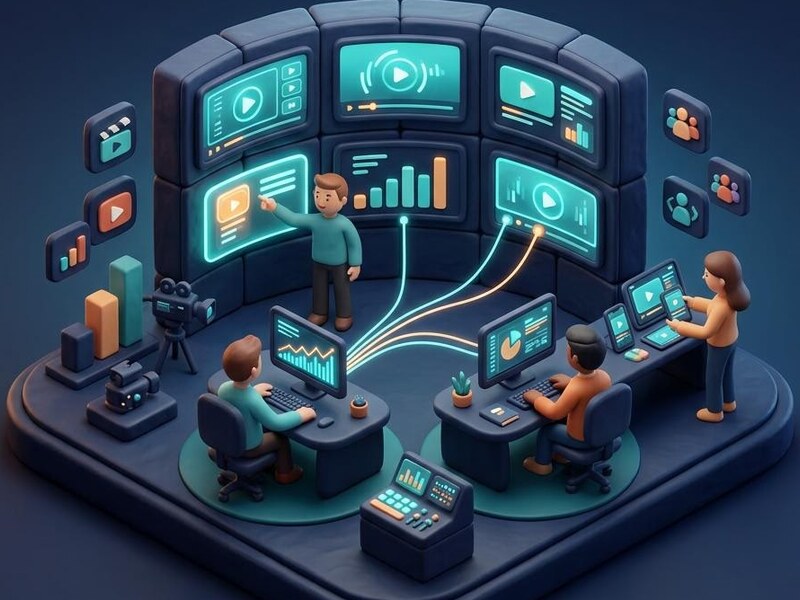
Conceptual visual for Dynamic Video Production
RM / Motion studiesFrame 001 — A story in motion
01 / Creative with a job to doScroll to see the system ↓
The point of view / 02

One good production.
Many useful lives.

We clarify the business purpose, audience, offer, customer questions, channels, existing footage, access, rights, approvals, and practical constraints. That context informs the creative brief and helps distinguish what should remain consistent from what could be adapted for a specific audience or placement.

We connect story, format, and distribution from the outset. Depending on the brief, the plan may cover short- and long-form content, advertising, brand and product stories, testimonials, remote or on-location capture, and a modular approach to edits and versions. Each proposed asset has a role; volume and production requirements are agreed rather than assumed.

  • 01Audience, campaign, and content strategy with creative briefs, scripts, and storyboards
  • 02Short-form and long-form video concepts for organic, paid, brand, product, and customer stories
  • 03On-location or remote capture planning, subject to access, permissions, and scope
  • 04Editing, motion graphics, sound, captions, and accessibility-minded finishing
  • 05Modular versions, audience adaptations, and repurposing from approved source material
  • 06Platform formatting and video discoverability recommendations
  • 07Video for websites, sales, customer education, training, and localization
  • 08Asset organization, rights and approval workflows, with AI-assisted tasks reviewed by people
  • 09Distribution coordination, measurement, and creative testing where agreed and data is available
The principle / 03

Don’t shoot for a file.
Shoot for possibility.

Plan the core story and potential adaptations together. Then decide what is worth making, where it belongs, and what a future edit could learn from it. The exact formats, volume, and channels are defined with your team.

Inside the program / 04

From first brief
to final format.

Work may include strategy, scripts, storyboards, capture, editing, motion, captions, approved adaptations, and organized exports. On-location production, drones, actors, customer participation, licensing, localization, publishing, platform or technology integrations, and reporting depend on scope, access, available tools, and legal permissions. Releases, usage rights, and approval responsibilities are clarified for the agreed work.

01 / 11

Start with a purpose, strategy, and useful brief

Video planning connects business objectives to audience needs, the customer journey, the message, and the place a video will be used.

  • Clarify the job of the video

    Set an intended role such as awareness, education, lead generation, customer retention, recruiting, or sales support; define the audience and the next useful action.

  • Build the brief

    Bring together the offer, audience questions, brand voice, proof, campaign context, channel requirements, call to action, access, approvals, and available source material.

  • Plan the story and production

    Depending on scope, develop themes, concepts, hooks, scripts, interview prompts, storyboards, shot lists, schedules, and organic or paid content plans.

02 / 11

Choose short- and long-form formats for the story

The right length and structure depend on what viewers need to understand and where they will encounter the content.

  • Short-form content

    Plan concise vertical or square videos for social, paid placements, websites, and landing pages. Possible formats include quick tips, FAQs, product highlights, founder perspectives, event clips, and customer stories.

  • Longer stories and explainers

    Interviews, webinars, podcasts, demonstrations, tutorials, educational series, company stories, case studies, and training may need more time and context.

  • Connect formats thoughtfully

    A longer interview or demonstration can supply source material for shorter edits when the content, permissions, and intended use make repurposing appropriate.

03 / 11

Create advertising, brand, product, and customer stories

Creative direction can serve distinct communication needs while keeping the message and visual treatment coherent.

  • Advertising and campaign creative

    Develop video concepts for agreed paid channels, with potential variations in hooks, message, offer, speaker, length, or call to action for structured testing.

  • Brand and product storytelling

    Show how a business works, what a product or service does, and why its details matter through explainers, demonstrations, founder stories, and behind-the-scenes content.

  • Testimonials and customer cases

    Plan interviews and story arcs that represent customer experience accurately. Participation, claims, releases, and use in advertising or other channels require the relevant approvals and rights.

Conceptual image accompanying production planning and capture
Visual study / 002Made with a destination in mind
04 / 11

Plan on-location or remote capture around access

Production logistics are shaped by people, locations, schedules, equipment, safety, and the approved brief.

  • On-location capture

    A scoped shoot may use a business site, facility, event, or other approved location. Crew, cameras, lighting, audio, multi-camera setups, and other equipment depend on production requirements and availability.

  • Remote recording

    Remote interviews, testimonials, expert discussions, or training can involve contributors in different places, with agreed guidance and recording workflows.

  • Confirm permissions first

    Location access, customer or participant releases, talent, music, stock, drone use, and other rights or licenses are subject to scope, access, and legal permissions; they are not presumed.

05 / 11

Edit for clarity, motion, sound, and captions

Post-production shapes raw material into a clear story and prepares it for agreed uses.

  • Construct and finish the story

    Editing may include footage organization, interview assembly, audio cleanup, music, color work, b-roll, screen recordings, and calls to action.

  • Use motion to explain

    Titles, lower thirds, animated typography, diagrams, charts, product or interface callouts, and logo treatments can clarify key points when appropriate.

  • Prepare accessible versions

    Captions, subtitles, readable graphics, and safe placement can be considered during finishing. Caption and accessibility requirements are confirmed for the relevant formats and channels.

06 / 11

Build modular versions and repurpose approved material

A defined versioning approach helps extend useful source content without losing its meaning or brand consistency.

  • Map what may change

    A version matrix can identify audience, message, hook, proof, speaker, offer, call to action, duration, and placement for each agreed adaptation.

  • Adapt with purpose

    Edit approved source material into relevant cuts or personalized elements when rights, inputs, and review allow; variations are planned rather than generated as arbitrary combinations.

  • Repurpose for related channels

    Potential adaptations include social clips, campaign creative, website segments, sales or email content, transcripts, and supporting materials. Asset counts and formats depend on scope and usable source material.

07 / 11

Adapt for platforms and video discoverability

A video can be prepared for its viewing environment and, where applicable, made easier to understand and find.

  • Fit platform specifications

    Consider aspect ratio, duration, opening, caption placement, safe zones, thumbnail, title, description, and call to action for the agreed placements.

  • Support search and discovery

    For relevant platforms, recommendations may include topic and search-intent research, titles, descriptions, chapters, transcripts, captions, thumbnails, and supporting page content.

  • Coordinate with broader content

    Video topics and page placement can align with related SEO, AI search, social, or campaign work when those services and the needed access are part of the engagement.

Conceptual image accompanying video editing and distribution
Visual study / 003The story continues beyond the edit
08 / 11

Use video across web, sales, training, and localization

Video can support communication beyond a social feed when the content and audience are a good fit.

  • Web and sales experiences

    Possible uses include homepage and service-page introductions, product demonstrations, case studies, FAQ content, sales follow-up, and objection-handling resources.

  • Customer and internal education

    Tutorials, onboarding, software guidance, standard procedures, product training, and internal communications can make recurring explanations easier to share.

  • Localize with appropriate review

    Translation, subtitles, alternate graphics or scripts, and voiceover may be considered for other languages or markets. Localization, distribution, and final language review depend on agreed scope and qualified review access.

09 / 11

Organize assets, rights, and approvals

Clear ownership and review practices make finished video easier to find, approve, and reuse appropriately.

  • Structure the asset library

    When included, organize source footage, edits, b-roll, graphics, captions, transcripts, thumbnails, and prior versions using agreed campaign, topic, product, location, or content labels.

  • Track usage permissions

    Confirm rights and license terms for participants, locations, music, stock, footage, logos, and intended placements before publication or reuse.

  • Set review and handoff steps

    Agree who reviews claims, brand, accessibility, releases, and final exports, plus how files are delivered and retained. Storage, source files, and approvals follow the agreed engagement.

10 / 11

Use AI with human direction and review

AI tools may support selected production tasks, but outputs still need editorial judgment and appropriate permissions.

  • Assist repetitive work where suitable

    Depending on tools and scope, AI may support ideation, transcripts, captions, clip discovery, resizing, metadata, or selected content adaptations.

  • Keep people responsible for decisions

    Human review checks accuracy, brand fit, context, claims, and appropriate use of source material before delivery.

  • Respect rights and disclosure needs

    AI voice, imagery, localization, and other generated or assisted elements are subject to agreed methods, available rights, legal requirements, and review; no tool or workflow is assumed.

11 / 11

Coordinate distribution, measurement, and testing

Publishing and learning can be part of the work when responsibilities, access, and data are agreed.

  • Plan distribution

    Map approved video to social, search, website, advertising, email, or sales channels. Publishing, paid-media management, and integrations depend on scope, platform access, and permissions.

  • Review relevant indicators

    If reporting is included and data is available, review measures such as reach, watch time, completion, engagement, clicks, leads, or conversions in relation to the video’s purpose.

  • Test and refine responsibly

    Where volume and data support it, compare agreed creative elements such as hooks, messages, offers, length, or calls to action. Use findings to inform future work without treating correlation as guaranteed business impact.

The operating rhythm / 05

Make. Learn.
Make it better.

A repeatable operating rhythm connects planning and production to distribution, learning, and the next creative decision.

  1. 01 / 06

    Strategy

    Define the audience, objective, message, offer, channels, constraints, and useful content opportunities.

  2. 02 / 06

    Create

    Brief, script, capture, record, animate, or produce the agreed source video.

  3. 03 / 06

    Transform

    Edit and adapt approved material into the formats and versions included in scope.

  4. 04 / 06

    Distribute

    Publish or deliver the approved assets through agreed channels, with access and responsibilities confirmed.

  5. 05 / 06

    Measure

    Review available indicators against the purpose of the content and the data that can be accessed.

  6. 06 / 06

    Optimize

    Apply relevant learning to the next brief, creative choice, format, or test, then repeat as appropriate.

What we learn informs the next brief.

A considered result / 06

Assets with
somewhere to go.

What we’re building toward

A purposeful, reusable video program with clear creative direction, channel-ready adaptations, and a process for learning from available performance data—not a promise of specific reach, growth, or return.

Who this is for

Organizations with expertise, products, services, or customer stories to communicate—and teams seeking a repeatable way to plan and use video across marketing, sales, education, or internal communications. Useful for teams working from new production, remote contributors, or existing footage.

The learning loop

When reporting is included and platform or analytics data is accessible, we can review measures such as viewing behavior, engagement, clicks, site activity, leads, or conversions against the intended objective. Findings can inform future topics, hooks, formats, and creative tests; measurement is subject to data quality and does not guarantee performance.

Good questions / 07

Before we roll.

What can a Dynamic Video Production engagement include?

Scope can cover strategy and briefs, scripts, production planning, original or remote capture, editing, motion graphics, captions, format adaptations, asset organization, and measurement. The included services, schedule, and deliverables are agreed for each engagement.

Can you work with both short-form and long-form video?

Yes. A plan may combine short-form clips with interviews, explainers, demonstrations, webinars, training, or other longer formats. The format and channel adaptations are chosen for the audience and purpose, then confirmed in scope.

Do you provide on-location filming, drones, actors, or customer interviews?

Capture and participants are planned around the brief. Location access, crew, equipment, drones, actors, customer participation, and associated releases or permissions are subject to availability, scope, and applicable legal requirements; none is assumed to be included.

Can one production be adapted for different audiences and channels?

Where source material and rights allow, approved content may be edited into different lengths, aspect ratios, messages, or audience versions. We define the adaptation logic and review steps together; no fixed number of versions or assets is promised.

How do you handle AI and localization?

AI may assist selected tasks such as ideation, transcripts, captions, or adaptation when appropriate, with human review for accuracy, brand fit, and permissions. Translation, voiceover, and market-specific localization are scoped separately and depend on language needs, tools, and review access.

Do you distribute video and report results?

Publishing, paid distribution, platform access, integrations, and reporting can be included when specifically agreed. Reporting depends on available channel access and data; results are not guaranteed and no particular reach, growth, or return is promised.


Next frame / Roaring Media Agency

Have a story
worth moving?

Tell us what you need to communicate, what material you already have, and where you want it to live. We’ll discuss an appropriate production scope together.

Request a Call